What to Expect From Home Care Physiotherapy in Melbourne
One in four older Australians has a fall every single year, and most of those falls happen at home, not out on a walk. Getting stronger somewhere unfamiliar, like a clinic across town, does not always fix that. A stronger grip on a clinic rail is not the same skill as a safer step on your own front porch. Home care physiotherapy melbourne services flip the model around and bring the physiotherapist to your lounge room, your hallway, your actual stairs. Real research backs this approach, and the results are hard to ignore.
What Happens at the First Visit?
The first session is mostly listening, not exercising. A physiotherapist walks through your home, checks your stairs, your bathroom, your usual routine, and asks what you are struggling with. From there, they build a plan around your actual goals, not a generic sheet of exercises. Total Health Choice, a Melbourne provider that has worked in homes since 2011, shares this plan with you and, if relevant, with your Home Care Package case manager. You leave the first visit with a clear idea of what happens next and why.
Does It Actually Reduce Falls?
Yes, and the number is bigger than most people expect. Physiotherapy-led programs cut falls by 42 percent for people still living independently at home, according to the Australian Physiotherapy Association. That is not a small edge. Falls among people 65 and over account for 94 percent of all fall-related deaths in Australia and well over half of fall-related hospital stays. A single fall can end someone’s independence overnight. Regular, targeted exercise at home closes that gap in a way generic advice never quite manages.
Who Actually Qualifies for Home Visits?
Older adults, people living with disability, and anyone recovering from surgery or a hospital stay generally qualify. Funding usually comes through a Home Care Package, the NDIS, or the newer Support at Home program, though private appointments are always an option too. Getting a package funded starts with My Aged Care, followed by an in-home assessment from the Aged Care Assessment Team. That sounds bureaucratic, and honestly it is a bit slow, but once approval lands, therapy can begin quickly. Some providers also work directly with TAC claims and private health cover, so funding is rarely a single narrow pathway. Ask upfront which pathway fits your situation, because the paperwork differs more than people expect.
What Does a Typical Program Actually Involve?
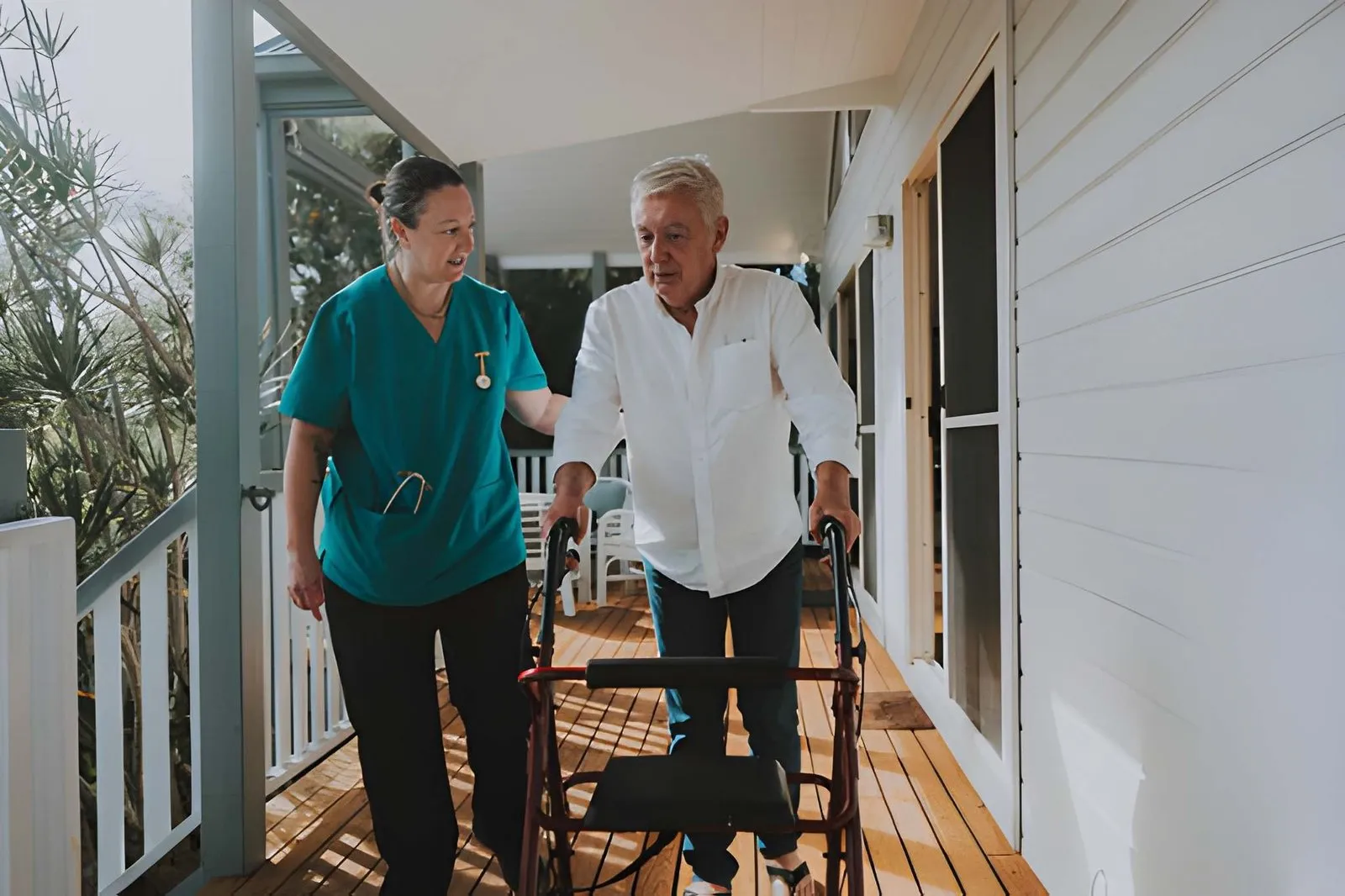
Strength work, balance drills, and walking practice make up most sessions, tailored to whatever is realistic in your space. Some clients work on getting off the couch safely. Others are training to manage two flights of stairs without a rail. Sessions usually run weekly or fortnightly, building gradually rather than pushing hard early and burning people out. Providers with in-house hydrotherapy or exercise physiology, like Total Health Choice, can shift a program into a pool or gym setting once home-based strength improves enough to make that useful. A team with more than a decade of experience and dozens of allied health staff on hand tends to spot these openings faster than a solo practitioner working alone.
How Do You Know If It Is Actually Working?
Progress reports are the honest answer. A good provider tracks strength, balance, and mobility over time and shares that with you and your family, not just a vague “doing well” comment. Look for measurable goals, like walking a set distance without stopping or managing stairs without a second person present. If a provider cannot show you a change over eight or twelve weeks, something in the plan needs adjusting. Home care physiotherapy only earns its cost when it produces a visible, trackable difference in daily life, not just a friendly chat once a fortnight.