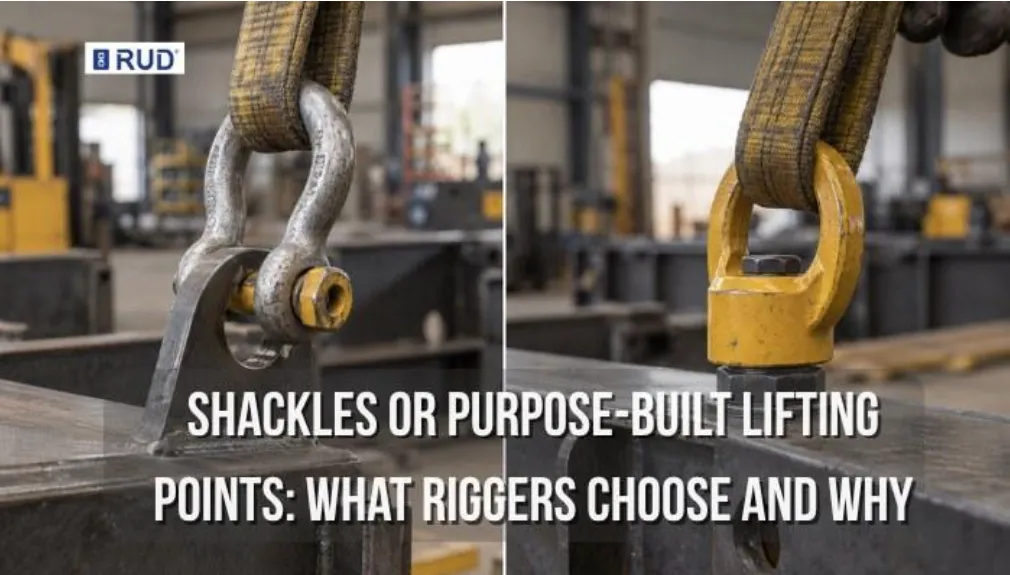
Shackles or Purpose-Built Lifting Points: What Riggers Choose and Why
Every rigger has a shackle in the truck and a lifting point spec sheet they’ve never actually opened. The shackle’s already rigged and working, so nobody stops to check what the spec sheet says. And that habit causes plenty of overloaded lifts on Australian sites.
Instead, making the right call means checking the load, the angle, and how often that lift repeats, rather than what’s already clipped to the sling.
Still, if you’re not sure whether your next job needs a shackle or a lifting point, don’t worry. RUD Australia sees crews make that choice daily across sites from Brisbane to Perth. Based on that experience, this article breaks down when each option genuinely earns its place.
What Sets Shackles Apart from Purpose-Built Lifting Points?
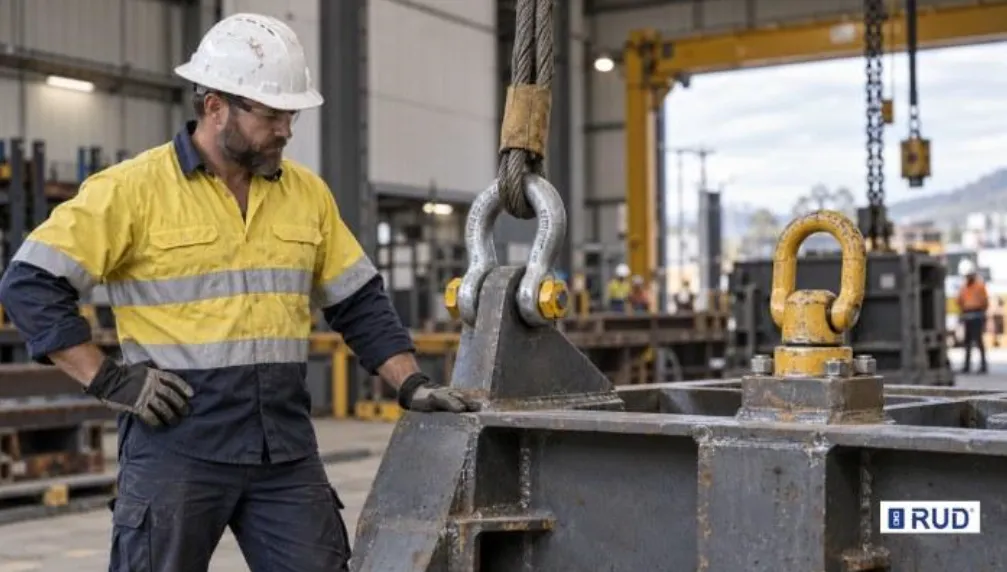
A shackle connects a sling to a load, while a lifting point attaches directly to the load itself. That’s the core split between generic rigging hardware and engineered lifting equipment.
The shackle sits on the generic side. It comes off the shelf in standard sizes, rated for straight vertical pull, and you rig it on almost anything with an eye or a hook (similar to a generic power adapter that plugs into almost any socket).
Meanwhile, lifting points sit on the engineered side. A manufacturer designs and rates each one for the exact mounting point, material thickness and direction of pull on that particular load.
And RUD Australia is one such manufacturer. Its range runs past 700 lifting slings and lashing points, and every one is tested and certified for a specific application.
Once you know the difference, the next question is when a shackle still makes sense on site.
When a Standard Shackle Still Gets the Job Done
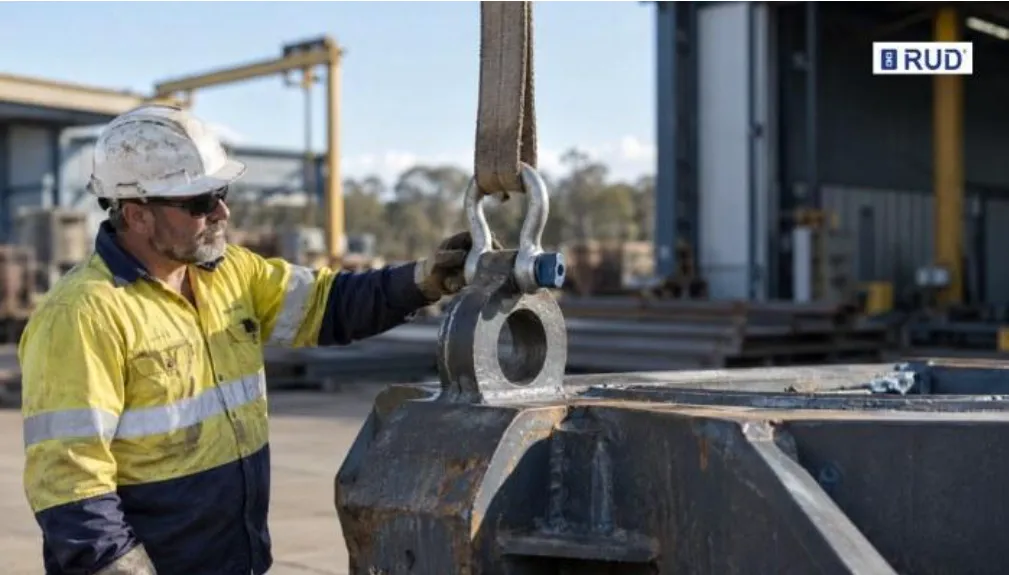
If the lift is a simple, single-leg pull with no fixed attachment point, a shackle earns its keep. You’ll find it holding up jobs where the load already has an eye, a ring or a hole built in, with no angled sling leg to calculate.
On these single-leg jobs, bow shackles handle multi-directional pull better than straight-sided dee shackles. The curved body lets the sling shift slightly without binding against the pin, and that small amount of movement keeps tension even on uneven or shifting loads.
And that flexibility also shows up in cost. A shackle sits in the site container ready for dozens of unrelated jobs, so you’re not paying for a fitting built around one specific load. For general rigging where the load changes daily, that’s a real advantage over a purpose-built point you’d only use once.
However, this advantage starts to disappear once the load gets heavier or the same lift happens week after week.
Why Riggers Reach for Purpose-Built Lifting Points on Heavy Loads
Riggers reach for purpose-built lifting points when the load’s weight, angle or repeat use makes a shackle too risky. Once a lift stops being a one-off, the case for engineered hardware gets stronger quickly.
Here’s how that plays out across two common situations.
Rated Angles Remove the Guesswork on Multi-Leg Slings
What happens when a sling leg pulls at an angle no one checked? The load will shift unevenly across each leg, and a shackle rated only for straight pull can end up carrying more than its limit allows. A lifting point avoids that overload risk because its stamped working load limit (WLL) already accounts for the angle.
RUD Australia builds that thinking into its ICE Grade 120 points, which carry rated capacities across common sling angle configurations. So the figure stamped on the fitting matches the actual lift, and most crews only need to learn this once.
Rotating and Bolt-On Points Suit Loads You Lift Again and Again
Fitting a rotating or bolt-on point once means every future lift on that load is already rigged. The hardware stays with the load instead of getting re-rigged each time. A rotating point takes that further still, swivelling under load so tension stays even as the sling changes direction mid-lift.
A bolt-on point takes a different approach. It bolts permanently to the load itself, so there’s nothing to swivel or adjust once it’s fitted. Precast concrete panels and structural steel beams commonly carry permanently fitted lifting points for this reason.
Shackle WLL vs Lifting Point WLL: Where the Numbers Actually Diverge
A shackle’s WLL and a lifting point’s WLL rarely mean the same thing once the sling angle changes.
Shackles carry their rated load straight through the pin and bow. Pull one at an angle, and you’re putting side load on equipment that was never rated to secure a load that way.
For example, if you’re running a bow shackle with two slings, the NSW Government’s guide caps the angle between them at 60 degrees. And if you go past that, the WLL stamped on the shackle no longer reflects a safe working capacity for that lift.
A lifting point follows a different standard. Its WLL only means safety if you install and load it exactly the way the manufacturer intended.
The manufacturer sets the figure and tests it to confirm it holds. Your job is checking that you’ve picked the right point and rigged it the way it’s meant to control the load, not stretching the rating to fit whatever’s in front of you. So if you bolt it on crooked, or pull it from the wrong direction, that rated number won’t reduce the risk you’ve just created.
If you mix the two up without checking both tables first, you’re trusting a figure that has nothing to do with the job you’re doing.
Why Habit Still Beats Better Hardware on Some Sites
Crews reach for shackles because they already own them and know how to rig them fast, and that same speed is exactly what most safety talks overlook. Site safety training tends to focus on overloading and worn gear, instead of how familiarity itself steers the choice before anyone checks if it’s the right one.
Let’s see where that shows up on the job:
- Shackles Sit Ready to Go: A rigger grabs whatever equipment is clipped to the sling first, and on a busy site, that’s almost always a shackle already in the truck.
- Installation Gets Skipped Under Pressure: Purpose-built lifting points come with specific requirements for correct installation, and crews under time pressure sometimes skip that check entirely.
- Nobody Owns the Decision: On most sites, nobody’s specifically responsible for approving hardware choice. Whatever offers safe access fastest usually wins by default, rather than by anyone’s actual decision.
- The Job Looks the Same as Last Time: A lift that resembles yesterday’s job gets rigged the same way, even when the load, angle or weight has slowly changed.
The safest sites build a simple check into how they operate: match the hardware to the load before the crane takes any weight. Doing that ensures the equipment on hand suits the risk in front of you, rather than just the job that’s easiest to start.
Choosing Rigging Hardware That Earns Its Place on Site
At the end of the day, getting the hardware choice right protects the load, the crew and the schedule in one decision.
As you already know, a shackle suits simple, single-leg jobs where the load already has an attachment point built in. Meanwhile, a lifting point takes over once the angle, the weight or the repeat use pushes past what a shackle can safely handle.
While you’re weighing that up, match the gear to the lift in front of you, not to whatever’s already sitting in the site container. Check the WLL before assuming one type of hardware covers a job it was never rated for.
RUD Australia supports Australian sites with lifting points designed, tested and certified in Brisbane, built to the ratings that particular lift needs. If you’re deciding which hardware suits your next job, the team can talk you through the right setup before you rig it.
Frequently Asked Questions
A few questions come up again and again from riggers and site managers about their rigging hardware. Here are the answers.
Do lifting points need to meet a specific height or angle requirement?
Yes, most lifting points are rated for a specific angle and mounting height, and going outside those required specifications voids the certified rating. Always check the manufacturer’s information before rigging a lift that differs from standard configuration.
How do you find the right lifting products for a heavy or repeat lift?
Recognising whether a lift is a one-off or repeat job helps narrow down the right products fast. For repeat lifts, look at systems built for permanent installation, and contact the manufacturer’s services team if the load or access point isn’t straightforward.
Where can I get clear information on shackle and lifting point performance?
Manufacturer documentation and government dogging and rigging guides give the clearest performance information. RUD Australia’s website lists rated capacities for its lifting point range, and its team can walk you through specifics for your job.