How to Match a Boat to Your Missouri Water, Crew, and Weekend Plans
Key Takeaways
- Choose the Missouri water you will use most, not the occasional dream trip.
- Make your primary activity, crew size, gear load, and storage plan part of the decision.
- Factor in towing, maintenance, registration, safety equipment, fuel, and seasonal care.
- Test the boat in conditions that resemble your usual lake, river, or stream outing.
From the broad Lake of the Ozarks coves to Table Rock Lake, Truman Reservoir, the Mississippi River, and clear Ozark streams, Missouri offers a wide range of boating environments. A used boat for sale can be a practical starting point, but the best choice depends on where you will launch, who will ride with you, and what a typical Saturday on the water actually looks like.
It is easy to focus on horsepower, upholstery, or a long list of accessories. Those details matter, but they do not replace a good match between the boat and your real routine. A family that wants to cruise, swim, fish a little, and pull a tube may need a different layout than an angler navigating shallow coves or a couple planning quiet evening rides near the dock.
Start With the Trips You Will Take Most Often
Before comparing listings, write down the activities that matter most. Rank each one as primary, regular, or occasional. That short exercise helps prevent buying a boat designed around an activity that only happens once or twice each season.
- Fishing on reservoirs, rivers, or small lakes
- Family cruising, swimming, and sandbar afternoons
- Tubing, skiing, or other tow sports
- Sunset rides and relaxed sightseeing
- Longer day trips with coolers, bags, and extra fuel
- Hunting, utility work, or access to remote campsites
For buyers comparing local options, reputable boat dealers in Missouri can help explain differences in layouts, trailer setups, and power packages. Still, the final choice should come back to your own primary use, normal passenger count, and home water.
Match the Boat to Missouri Water Conditions
Missouri boaters often move between sheltered coves, large open-water stretches, winding rivers, and shallow stream sections. A boat that feels ideal in calm water may be less comfortable when wind builds chop across a large reservoir or when wakes increase on a busy summer weekend.
- Small lakes and calm rivers: Prioritize easy launching, maneuverability, shallow draft, and a layout that does not feel oversized at the ramp.
- Large reservoirs: Consider freeboard, secure storage, seating support, and a hull shape that suits rougher water.
- Rivers: Account for current, changing water levels, floating debris, and the need for attentive handling.
- Shallow coves and stream access: Review draft, propeller exposure, and whether the boat can be used without constantly worrying about bottom contact.
Hull design affects ride, handling, draft, and power needs. A deeper-V hull can help soften a rougher ride, while flatter-bottom designs can be useful in calmer, shallower settings.
Compare Boat Types by Their Everyday Strengths
Fishing Boats
Fishing boats usually prioritize casting room, rod storage, livewells, and slow-speed control. Look beyond top speed and consider whether there is enough stable deck space for the kind of fishing you do, whether that is crappie fishing on a reservoir or working river edges and coves.
Pontoons
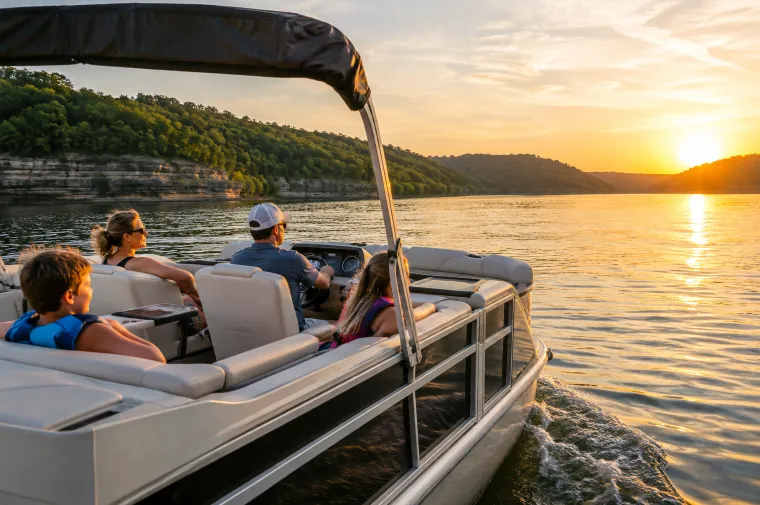
Pontoons are popular for social cruising because they offer ample seating, easy boarding, shade options, and room for a family’s cooler-and-towel routine. Check capacity, storage, power, and handling before assuming every pontoon will perform the same with a full crew.
Bowriders and Deck Boats
These versatile layouts can work well for families who want to cruise, swim, do some light fishing, and enjoy occasional tow sports in one package. Focus on usable storage, safe walkways, seating comfort, and ease of boarding after swimming.
Center-Console and Fish-and-Ski Boats
Center-console boats offer open deck space and good visibility from the helm, which can appeal to anglers and boaters on larger bodies of water. Fish-and-ski models offer a middle ground for buyers who split time between fishing and watersports, although a compromise boat may not match the specialized performance of a dedicated bass boat or ski boat.
Count People, Gear, and Safe Space
Plan around the normal crew, not the rare day when every seat is filled. Include life jackets, coolers, anchors, fishing tackle, tow ropes, water toys, bags, and enough space for people to move without crowding the helm or boarding area. Follow the boat’s capacity plate and posted limits. Federal capacity-label rules specify the maximum numbers of persons, weight, and horsepower information shown on qualifying boats.
Also consider who will be aboard. Young children, older adults, and guests with limited mobility may benefit from stable boarding, sturdy handholds, a swim ladder, and easy-to-reach seating. Safety equipment should be accessible rather than buried beneath a pile of gear.
Build a Complete Ownership Budget
The purchase price is only the beginning. Make a first-year budget that includes the boat, motor, trailer, registration, insurance, fuel, service, required safety gear, cover, electronics, launch fees, dockage, and storage. Missouri winters also make off-season protection and battery care important parts of the ownership plan.
Keep a reserve for repairs and replacement items. A boat that fits the initial payment but strains the annual operating budget can quickly become less enjoyable.
Confirm Storage, Towing, and Launching Before Buying
Measure the garage, driveway, or storage space before committing. Compare the loaded trailer weight, not just the boat’s dry weight, with the tow vehicle’s rated capacity. Include fuel, motor, batteries, gear, and trailer weight in the real-world picture.
Finally, visit the ramps you expect to use. A boat may fit the budget yet be inconvenient at a narrow ramp, difficult to store, or too heavy for the vehicle that will tow it. A water test is equally valuable. Check acceleration, steering, visibility, trim response, vibration, and comfort with the people and gear you expect to bring.
Choose the Missouri Boating Life You Will Actually Live
The smartest boat choice is rarely the biggest, fastest, or most heavily equipped option. It is the one that fits your Missouri water, your regular crew, your activities, your tow vehicle, and your yearly budget. When those details line up, each launch is more likely to feel simple, safe, and worth repeating.