How to Choose Flooring for Every Room in Tulsa, Oklahoma: Comfort, Durability, and Care
Table of Contents
- Start With the Room, Not the Trend
- Key Factors to Compare Before Choosing Flooring
- Room-by-Room Flooring Priorities
- Flooring for Homes With Pets and Children
- Indoor Air Quality and Material Selection
- How to Plan a Flooring Budget and Prepare for Installation
- Common Flooring Mistakes to Avoid
- A Simple Way to Make the Final Choice
Choosing new flooring for a Tulsa home is easier when the decision begins with the way each room is actually used. A surface that feels ideal in a quiet bedroom may be a poor fit for a busy kitchen, a humid bathroom, or an entry that collects rain, grit, and outdoor debris. For homeowners comparing materials and installation approaches, a trusted hardwood floor company in Tulsa for premium installations can help turn product samples into a plan that fits the home.
Style still matters, especially when flooring connects open living areas, hallways, and kitchens. But long-term satisfaction usually comes from balancing appearance with moisture resistance, comfort, cleaning needs, sunlight, pets, children, and the condition of the subfloor. In Tulsa, that practical approach can help a floor continue to look appropriate through changing seasons and everyday family life.
Start With the Room, Not the Trend
Popular colors, plank widths, and tile patterns can offer inspiration, but they should not decide the project by themselves. Begin by identifying what happens in the room: frequent spills, muddy shoes, direct sun, rolling office chairs, heavy furniture, bare feet, or long periods of standing. A guest room may allow comfort and visual preference to lead the decision, while a kitchen needs a surface that can handle repeated cleaning and the occasional dropped pan.
Bring home samples whenever possible. View them near cabinets, paint, upholstery, and trim in both daylight and evening lighting. A floor that appears warm and calm under showroom lights can look substantially different in a home with large windows or darker walls.
Key Factors to Compare Before Choosing Flooring
Performance and daily upkeep
- Water resistance: Consider spills, humidity, plumbing fixtures, and the possibility of standing water.
- Durability: Match the material to traffic, pet nails, furniture movement, and likely dents or scratches.
- Comfort: Think about warmth, softness, noise control, and how the floor feels when standing for long periods.
- Cleaning: Choose a routine that fits your household, whether that means vacuuming, damp mopping, spot treatment, or grout care.
Appearance, installation, and cost
- Visual continuity: Compare color, texture, sheen, and scale with the finishes already in the room.
- Installation requirements: Review subfloor preparation, removal of existing flooring, acclimation, transitions, and door clearance.
- Lifetime value: Look beyond the material price to include labor, maintenance, repairs, and expected service life.
Room-by-Room Flooring Priorities
Living rooms and family rooms
Living spaces often call for a balance of comfort, appearance, and durability. Hardwood and engineered wood create a classic, continuous look. Luxury vinyl and laminate can offer practical alternatives for homes that need straightforward cleanup, while carpet provides softness and sound absorption. Medium tones and subtle texture may make ordinary dust and light wear less noticeable than very dark, glossy finishes. In open layouts or upstairs rooms, rugs and suitable underlayment can also help reduce sound.
Kitchens
Kitchen flooring should prioritize water resistance, stain resistance, traction, and easy cleaning. Porcelain tile, luxury vinyl, kitchen-rated laminate, and properly sealed wood products all deserve consideration, depending on the household. Ask practical questions before buying: Can the surface handle dropped cookware? Are seams vulnerable to spills? Will it feel slippery when wet? Is it comfortable enough for long cooking sessions? Tile is durable and easy to clean, but grout and a textured surface should be considered as part of the maintenance plan.
Bathrooms and laundry rooms
In bathrooms and laundry areas, moisture management outweighs trend-driven choices. Porcelain or ceramic tile, sheet vinyl, and waterproof resilient flooring are common options because they are suited to wet conditions. Details matter as much as the visible surface: properly sealed edges, appropriate underlayment, sound transitions, ventilation, and attention to potential leaks all protect the area beneath the floor. Avoid products that can swell or absorb repeated moisture unless the manufacturer specifically approves them for the location.
Bedrooms
Bedrooms allow more room for personal preference. Carpet can make a room quieter and softer underfoot, while hardwood, engineered wood, cork, or resilient flooring paired with an area rug can simplify dust removal and create a cleaner visual line. Choose colors that support rest without making the room feel lifeless. Softer neutrals, natural wood tones, and low-sheen finishes often work well with changing bedding and décor.
Entryways and hallways
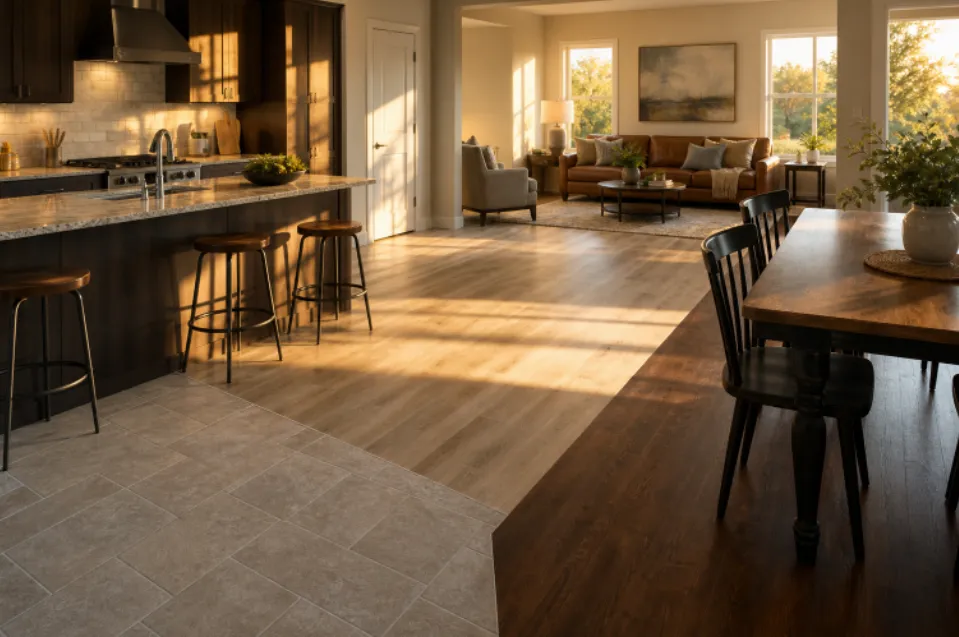
Entryways and hallways take concentrated wear from shoes, bags, pets, and frequent movement. Tile, luxury vinyl, hardwood with an appropriate finish, and durable laminate can all work when selected for the conditions. Use textured mats, provide shoe storage, and sweep grit regularly to reduce abrasion. If different materials meet at an entry or hallway, planned transition pieces can create a deliberate connection instead of a disjointed look.
Flooring for Homes With Pets and Children
For active households, prioritize scratch response, stain cleanup, traction, odor control, and realistic maintenance. Textured surfaces can offer better footing for pets than highly polished flooring. Moderate color variation and restrained patterns can also make small messes and everyday wear less obvious. Carpet adds cushioning but needs prompt attention to accidents, while tile and resilient flooring are generally simple to wipe clean. Before purchasing any product, review its care instructions and warranty exclusions rather than assuming every wood-look floor performs the same way.
Indoor Air Quality and Material Selection
Flooring projects can involve adhesives, coatings, carpet cushion, pressed-wood components, dust, and temporary odors. The EPA recommends strong ventilation during installation and after materials that may release pollutants are installed. Select products with clear emissions information, keep materials dry, address existing moisture concerns first, and follow the manufacturer’s instructions for adhesives, finishes, and cleaning products.
How to Plan a Flooring Budget and Prepare for Installation
- Measure each room carefully and include a reasonable allowance for cuts and waste.
- Separate the costs of material, labor, removal, disposal, trim, transitions, furniture moving, and subfloor repair.
- Keep a reserve for unexpected issues, particularly uneven subfloors or moisture-related repairs.
- Clear fragile items, electronics, wall décor, and small furniture before work begins.
- Confirm access paths, room downtime, door adjustments, vents, stairs, baseboards, and acclimation needs before installation day.
Common Flooring Mistakes to Avoid
- Choosing only from a small showroom sample without checking it in the home.
- Ignoring moisture, direct sunlight, or traffic patterns.
- Skipping a thorough subfloor inspection.
- Using too many unrelated flooring styles across connected rooms.
- Leaving transitions, trim, and removal costs out of the budget.
- Selecting a high-maintenance surface for a household that needs simple upkeep.
A Simple Way to Make the Final Choice
List the room’s biggest challenges, rank the three most important needs, and remove any material that fails those tests. Then compare the remaining choices by appearance, comfort, care routine, installation requirements, and total project cost. A room-by-room comparison of flooring performance can also help homeowners narrow a short list before viewing full-size samples in person. The best choice is not necessarily the trendiest option. It is the one that works reliably in the specific Tulsa room where it will be used every day.