How Structured School Days Help Teens Build Focus, Leadership, and College Readiness
Key Takeaways
- Consistent routines can help teens manage time, reduce distractions, and develop dependable study habits.
- Leadership develops through responsibility, teamwork, feedback, and repeated practice.
- Structure is most useful when it is balanced with student choice and growing independence.
- Physical activity, service, arts, and hands-on projects can build skills that extend beyond academics.
- Families should evaluate the whole student experience, not rules or reputation alone.
For many families, choosing a school means looking beyond test scores and course catalogs. Whether a student attends a neighborhood school, a day program, or a private boarding school, the daily environment can shape how they manage time, respond to responsibility, and build confidence.
Structure is not simply a list of rules. At its best, it gives teenagers a reliable framework for learning while leaving room to make decisions, recover from mistakes, and become more independent. Clear expectations, supportive adults, meaningful activities, and predictable routines can work together to prepare students for college, career training, service, and adult life.
Table Of Contents
- Why Structure Matters for Teenagers
- How Daily Routines Support Focus and Attention
- Why Leadership Requires Practice
- Technology Boundaries and Student Focus
- Connecting Structure With Academic Readiness
- The Role of Physical Activity and Healthy Habits
- Belonging, Mentorship, and Student Support
- A Family Checklist for Comparing School Environments
- Common Mistakes Schools and Families Should Avoid
- Building Structure Without Losing Independence
Why Structure Matters for Teenagers
In a school setting, structure can include a dependable schedule, clear standards for behavior and work, regular check-ins, and established ways to ask for help. Teens are still developing the skills needed to plan ahead and regulate attention. A predictable day reduces avoidable uncertainty, making it easier to focus on the task at hand.
For example, a student who begins each day by checking assignments, keeps materials organized, studies at a regular time, and follows a consistent bedtime may gradually feel less rushed and more prepared. The goal is not to control every hour. It is to help students practice routines they can eventually manage without close supervision.
How Daily Routines Support Focus and Attention
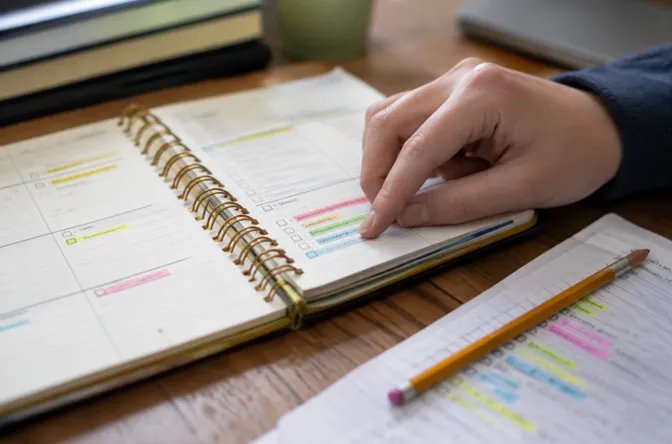
Repeated routines make starting easier. When a student knows that the first 15 minutes after school are for reviewing deadlines, or that evenings include a focused homework block, there is less time lost deciding what to do next. Simple tools such as a weekly planner, a task checklist, and a prepared backpack can make a meaningful difference.
Consistency also matters in the classroom. Students are better positioned to participate when they understand expectations to arrive prepared, complete work, contribute to discussions, and seek clarification. A quiet study period can be especially valuable when students have access to teachers, tutors, or peers who can help them move past a difficult assignment.
Why Leadership Requires Practice
Leadership is more than a title on a résumé. It involves listening, communicating clearly, following through, delegating fairly, and accepting accountability. Those skills develop when students have authentic responsibilities rather than only occasional chances to speak in front of a group.
A student organizing a service project, for instance, may need to set a deadline, divide tasks, address a disagreement, and explain the plan to others. Even if the project is imperfect, the experience can teach more than a lecture about leadership. Strong programs offer feedback after these experiences so students can reflect, adjust, and try again.
Technology Boundaries and Student Focus
Schools continue to reconsider phone policies because personal devices can compete with classwork and face-to-face interaction. At the same time, families reasonably expect dependable emergency communication, and some students use technology for accessibility or school-related tasks. The best policy is clear, practical, and consistently explained.
Current evidence also calls for nuance. Research summarized in a Harvard Kennedy School discussion on school phone restrictions found that lockable pouches reduced phone use, but they were not a simple solution for academic performance or for every aspect of student well-being. Families should ask when devices are accessible, how exceptions are handled, and how the school communicates during emergencies.
Connecting Structure With Academic Readiness
College readiness is largely about habits. Students need practice taking notes, breaking large assignments into smaller steps, meeting deadlines, preparing for assessments, and asking for help before a problem grows. These habits also matter in trade programs, apprenticeships, the military, and the workplace.
Structured study time is most valuable when it includes real support. Teachers and advisors should provide useful feedback, explain expectations, and help students identify next steps. Writing assignments, research projects, laboratory work, and collaborative problem-solving can help teens gain confidence with complex tasks that do not have an immediate answer.
The Role of Physical Activity and Healthy Habits
Movement can provide balance in a demanding school day while also creating opportunities for teamwork, persistence, and stress management. Athletics are one option, but students can also benefit from fitness training, hiking, recreation, dance, and other noncompetitive activities. Programs should be age-appropriate, welcoming, and led by qualified adults.
Sleep, nutrition, and activity also affect readiness to learn. The healthy sleep guidance for adolescents notes that teens ages 13 through 18 generally need eight to 10 hours of sleep per 24 hours. A school culture that values preparation should recognize that exhausted students may need support with routines, not just reminders to work harder.
Belonging, Mentorship, and Student Support
Students are more likely to engage when they feel known and respected. Teachers, advisors, coaches, counselors, and older peers can all provide encouragement and perspective. Small-group discussions, regular advisor meetings, and accessible office hours may make it easier for a student to raise a concern before it becomes a larger issue.
Support should also account for different backgrounds, learning needs, personalities, and goals. A structured environment is most effective when students understand that expectations are applied fairly and that asking for assistance is a responsible choice.
A Family Checklist for Comparing School Environments
- Ask what a typical school day looks like from arrival through evening study time.
- Find out how academic help is offered when a student falls behind.
- Review how discipline policies are communicated and applied.
- Look for meaningful opportunities in leadership, service, arts, athletics, and career exploration.
- Ask how the school manages technology, emergencies, and family communication.
- Consider whether the environment fits the student’s learning style, personality, and goals.
Common Mistakes Schools and Families Should Avoid
Strict rules cannot substitute for effective teaching, supportive relationships, or engaging coursework. Families should also avoid assuming that one approach works for every teenager. Students need clear responsibility, but they also need instruction on how to handle it. Ignoring student feedback, sleep, stress, or a sense of belonging can undermine even the most organized program.
Building Structure Without Losing Independence
Effective structure gives teenagers a dependable starting point, then helps them make stronger choices on their own. The most valuable school environments combine clear expectations with mentorship, academic support, meaningful responsibilities, and room to grow. When families look beyond labels and examine the daily student experience, they can better identify a setting that helps a teen become a focused learner, dependable teammate, and capable young adult.