Handling the First 24 Hours Following a Bicycle Crash
Key Takeaways
- Put safety and medical care ahead of photos, insurance calls, or property damage.
- Document the scene early because vehicles, debris, weather, and traffic conditions can change quickly.
- Save damaged equipment, clothing, receipts, medical records, and witness information.
- Give factual information, but do not guess, argue, or accept blame at the crash scene.
- Insurance and reporting requirements vary by state, so confirm the rules that apply where the collision happened.
Table Of Contents
- The First Few Minutes After the Crash
- Why Medical Care Should Come First
- Reporting the Collision
- What to Photograph and Save
- Finding Witnesses and Recording Details
- Handling Early Insurance Contact
- What to Do During the Next 24 Hours
- Common Mistakes to Avoid
- A Simple Bicycle Crash Checklist
- Final Thoughts
A bicycle crash can leave a rider shaken, in pain, and unsure what to do first. A simple plan can make the first 24 hours more manageable: get safe, get medical attention, report the collision when appropriate, and preserve the details before they disappear.
When injuries, vehicle involvement, or insurance questions complicate the situation, speaking with Orlando bicycle injury attorneys may help a rider understand the next steps. Still, the immediate priorities remain personal safety, appropriate care, and a clear record of what happened.
The First Few Minutes After the Crash
Start by checking yourself and anyone else involved for urgent injuries. Call 911 if there is heavy bleeding, trouble breathing, severe pain, confusion, fainting, a possible head injury, suspected broken bones, or an immediate traffic hazard. Do not try to “walk it off” if you feel disoriented or unstable.
If you can move safely, get out of active traffic and away from further danger. Do not leave the area simply because the bicycle still works or the driver seems cooperative. A crash scene can become more dangerous when passing vehicles cannot see a rider, a bicycle, or debris in the road.
Why Medical Care Should Come First
Not every injury is obvious at the roadside. Adrenaline can mask pain, while symptoms from a concussion, neck injury, soft-tissue injury, or internal injury may appear later. Tell the medical provider how the crash happened, where your body struck the ground or vehicle, whether you hit your head, and every symptom you notice.
Watch for delayed symptoms
Seek prompt medical attention if you develop worsening headache, dizziness, vomiting, blurred vision, numbness, weakness, unusual sleepiness, chest pain, abdominal pain, or increasing swelling. Follow discharge instructions and attend recommended follow-up appointments. Keep visit summaries, prescriptions, bills, and work restriction notes.
The risks are substantial. The estimated number of emergency department visits for nonfatal bicycle crash injuries is about 120,000 each year in the United States, according to the CDC. Medical documentation can support your recovery while also creating a contemporaneous record of symptoms and treatment.
Reporting the Collision
Contact law enforcement when someone is injured, a motor vehicle is involved, property damage is significant, the other person leaves, or local rules require a report. An officer may document basic facts, identify the parties, and assign an incident or report number that you can request later.
Give calm, accurate answers. Share what you saw and experienced, but do not estimate speed, distance, or fault if you are uncertain. Avoid arguing with a driver or trying to resolve the claim at the scene. A useful response is, “I will provide the facts as clearly as I can.”
What to Photograph and Save
Take wide photos before close-ups if you are physically able and it is safe to do so. Wide images can show the overall location, lane positions, intersection layout, sight lines, and nearby businesses. Then photograph specific details that may be repaired, cleaned up, or moved within minutes.
- The bicycle, vehicle, helmet, lights, and other damaged gear.
- Visible injuries, torn clothing, shoes, and damaged personal items.
- Traffic signals, signs, crosswalks, bike lanes, lane markings, and road surface conditions.
- Debris, broken parts, skid marks, tire marks, and obstructions.
- Weather, lighting, and the crash location from several directions.
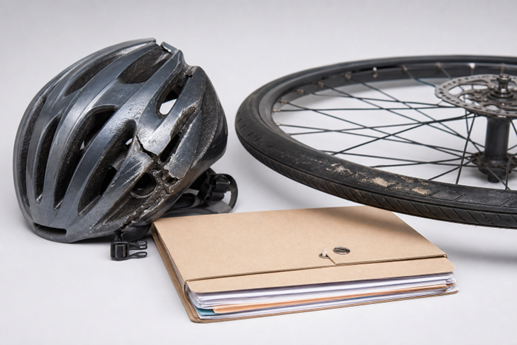
Keep the bicycle, helmet, clothing, and accessories in their post-crash condition whenever possible. Do not discard a cracked helmet, wash stained clothing, or rush into repairs before taking clear photos and considering whether the items may be needed to explain the impact.
Finding Witnesses and Recording Details
Ask witnesses for their names, phone numbers, and email addresses before they leave. They do not need to decide who caused the crash. A witness may be helpful simply because they saw a signal change, a vehicle turn, a rider’s position in the roadway, or what happened immediately afterward.
As soon as practical, write a personal timeline. Include your route, direction of travel, traffic conditions, signals, road hazards, sounds, statements made at the scene, and the symptoms you felt. Memory can fade quickly after a stressful event, so a dated note can be more reliable than trying to reconstruct events weeks later.
Handling Early Insurance Contact
An insurance representative may call soon after the crash. You can be courteous while taking time to gather records and understand what is being requested. Provide basic identifying information when appropriate, but avoid guessing about facts, minimizing injuries, or agreeing to a recorded statement before you feel prepared.
Be cautious about signing broad medical authorizations or accepting a quick payment before the extent of treatment, missed work, and equipment damage is known. Coverage rules, deadlines, and no-fault requirements differ by state. Review your own policy and obtain qualified guidance for serious injuries or disputed claims.
What to Do During the Next 24 Hours
Create one digital folder and, if helpful, one paper folder for crash-related materials. Put photos, medical documents, claim communications, and receipts in date order. Save screenshots of calls or messages with insurers, drivers, or witnesses, and record claim numbers and the names of representatives.
Also track practical losses, including transportation costs, prescription expenses, bicycle repair estimates, replacement gear, missed work, reduced duties, and daily limitations. Federal bicycle safety guidance for riders and drivers emphasizes visibility, predictable riding, and attention to road rules, all of which remain important after recovery as well.
Common Mistakes to Avoid
- Ignoring symptoms: Report new or worsening pain to a medical professional.
- Throwing away damaged property: Preserve it until the matter is fully reviewed.
- Posting detailed crash accounts online: Casual comments or photos can be misunderstood.
- Delaying documentation: Witnesses, video footage, and receipts can become harder to locate.
- Accepting blame under pressure: Focus on facts rather than conclusions about fault.
A Simple Bicycle Crash Checklist
- Call 911 for serious injuries, danger, or emergency assistance.
- Move to safety only when doing so will not create another risk.
- Get medical care and follow all medical instructions.
- Report the collision when required or appropriate.
- Collect driver, witness, and insurance information.
- Photograph the scene, injuries, bicycle, vehicle, and road conditions.
- Preserve damaged equipment, clothing, and records.
- Write down your timeline while the details are fresh.
Final Thoughts
The first 24 hours after a bicycle crash are about protecting your health and preserving a clear record. Put safety first, seek care, document what you can, and organize the information you receive. These steps cannot determine every outcome, but they can reduce confusion and help you make better decisions after a difficult event.